
Shaping Long-Term Solutions: Navigating the Refrigerant Transition
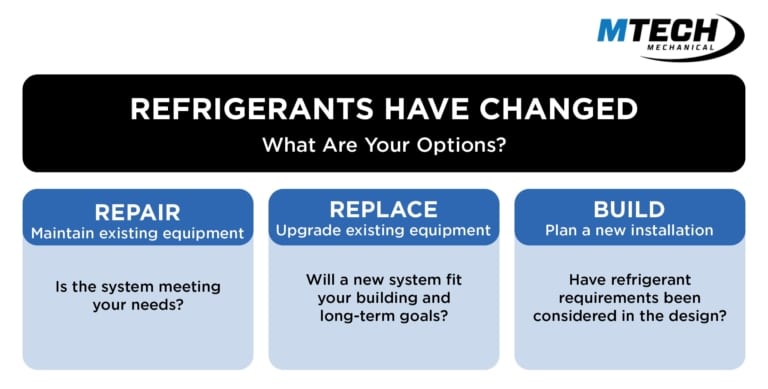
Refrigerants have changed, which may impact the HVAC systems in your building. Whether you’re maintaining existing equipment, considering a replacement, or planning new construction, the requirements associated with new refrigerants need to be evaluated.
Repairing vs Replacing
The transition to new refrigerants doesn’t mean existing HVAC equipment needs to be replaced. The decision to repair or replace existing equipment depends on the condition of your system, the availability of compatible components, and the long-term costs of keeping it running. Consider:
- Refrigerant Availability
Older refrigerants are no longer being manufactured and must be sourced from the used refrigerant marketplace. - Repair and Maintenance Costs
As manufacturers phase out older equipment models, certain replacement parts have become harder to source and more expensive. Frequent repairs may make replacement worth evaluating. Existing VRF systems that utilize older refrigerants may not have equipment available for system modifications or expansion. - Remaining Equipment Life
A system nearing the end of its expected lifespan may not justify a major repair. Consider the cost of repairs against the expected years of reliable operation remaining. - New Equipment Availability and Cost
New equipment may be a practical replacement option, but availability, lead times, and pricing vary by manufacturer. New systems incorporate required refrigerant safety features, such as leak detection and mitigation controls, directly into the equipment. Allowable refrigerant volumes in spaces are lower than older refrigerants and spaces served by equipment may have modifications needed to meet these limits.
For New Builds, Retrofits, and Replacements
The best equipment solution needs to account for how the system will be installed, operated, and maintained.
- Building Compatibility and Code Requirements
Refrigerant volume limits in spaces, piping layouts, and equipment locations can influence system selection. With VRF systems, additional adjustments to equipment configurations or additional safety systems may be required. - Long-Term Performance and Serviceability
Look beyond initial equipment costs. Energy efficiency, maintenance requirements, replacement part availability, and future operational needs all determine whether the equipment is the optimal choice for your building.
Looking Ahead
The refrigerant transition has added another layer to HVAC planning, but it doesn’t change the goal: selecting a system that works for your building today and continues to meet its needs in the years ahead. Our licensed, in-house engineers are available to address your questions and concerns to provide innovative and practical design solutions to meet your needs. We take pride in delivering the highest quality designs and most efficient systems for your unique building or process system. Evaluating options early with the appropriate expertise can help identify potential challenges before equipment is selected or major investments are made.
